Thalposh Design That Make Every Ritual More Beautiful
Indian cultures are entrenched in rituals, culture, and art. Of all the rituals required of weddings, celebrations, and religious activities, thalposh is one that is ranked high. Thalposh is not only an attractive fabric; it is a sign of respect, a sign of happiness, and a sign of culture. Whether it is a wedding or a pooja, a beautifully designed thalposh will increase the significance of the ceremony as well as give the event luxury.
What is Thalposh?
A thalposh is a decorated cloth that is used to cover religious plates (thalis) in religious rituals, weddings, engagements, baby showers, and festive celebrations. Worn traditionally in fine fabrics with embroidery, lace, mirrors, beads, or zari, thalposh bears evidence of the Indian artisanship.
Thalposh is regarded as a necessary one in the Indian community during auspicious occasions, particularly in North India and in Rajasthan. When gifts, sweets, coconuts, jewelry, or other items are given, it means purity and respect.
Importance of Thalposh Culturally
The thalposh is not merely decorative with respect to culture. It suggests dignity, history, and the holiness of ceremonies. A thalposh that has a beautiful design is worn during the wedding to cover shagun thalis that are given between households. Thalposh is one such offering that is used to make offerings to gods in poojas to bring out a sense of divine and respectful nature.
The selected thalposh design is thoughtful and demonstrates the values of the family, detail, and respect towards traditions inherited over the generations.
Types of Thalposh Design
Thalposh is very unique in its nature. Various designs are appropriate for various occasions, themes, and preferences.
1. Old-Fashioned Thalposh Design.
Traditional Thalposh Design feature rich colors like red, maroon, green, and golden shades. Embellished with zari embroidery, gota patti, kundan work, and mirror embellishments, these are usually embellished. Such thalposh designs are ideal for weddings, Karwa Chauth, and religious ceremonies.
2. Floral patterned Thalposh Design
Floral thalposh design are elegant and comforting. These apps are inspired by nature and contain embroidered flowers, vines, and leaves that are printed. They suit engagements, baby showers, and festival poojas best.
3. Minimal & Modern Thalposh
For those who prefer subtle elegance, minimal thalposh design with pastel colors, light embroidery, and clean borders are a great choice. The designs are appropriate in contemporary houses and small-scale rituals.
4. Handmade Thalposh
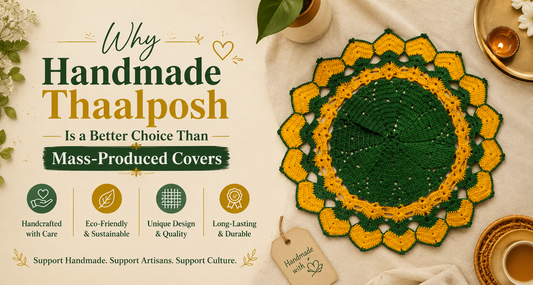
Handmade thalposh showcases the skill of Indian artisans. They are original and unique, and each piece is made with love with the help of traditional methodology. Choosing a handmade thalposh also supports local craftsmanship and sustainable practices.
Fabrics Used in Thalposh (Woolen Only)
The fabric plays a very important role in the beauty and durability of a thalposh. When it comes to woolen thalposh, it not only enhances the look of the pooja thali but also adds warmth and tradition to every ritual.
Woolen Thalposh — Traditional & Elegant
Handmade woolen thalposh are known for their rich texture and beautiful hand embroidery. They give a soft, royal, and graceful touch to wedding ceremonies and festive rituals.
Pure Wool Thalposh — Durable & Premium
Made with high-quality wool, these thalposh are long-lasting and perfect for special occasions like weddings, engagement ceremonies, and religious functions.
Designer Woolen Thalposh — Decorative & Unique
Crochet and hand-knitted woolen thalposh designs add charm and uniqueness to your pooja thali. Perfect for wedding rituals, return gifts, and traditional events.
A well-designed woolen thalposh not only decorates the thali but also enhances the spiritual feel of the ceremony with its handmade beauty and warmth.
Thalposh for Weddings
Weddings cannot be complete without a well-decorated thali that is adorned with a beautiful thalposh. Bridal thalposh designs often feature heavy embroidery, zari borders, pearls, and stonework. The most popular color combinations are red and gold, as they are the colors of love and prosperity.
The combination of the thalposh design and the wedding theme or bridal gown makes it aesthetically appealing to the eyes and complementary to each other.
Giving Thalposh during Festival and Pooja
Thalposh adorns pooja thalis during festivals such as the Diwali, Navratri, Karwa Chauth, and Raksha Bandhan festivals. Bright colors, traditional motifs, and auspicious symbols like lotus, kalash, and swastik are commonly used in festive thalposh designs.
A special thalposh to use in festivals also ensures that the rituals are arranged in a well-planned way, which is also attractive to the eyes.
The Differentiation of the Right Thalposh Design.
The selection of the best thalposh would be based on a number of factors:
Time of the day for a wedding, pooja, festival, or gifting.
Theme of color match with decor or ritual theme.
Quality of the fabric—long and comfortable to wear.
Design/Embellishment: Traditional or modern.
An excellent thalposh design must be beautiful and functional.
Treatment and Care of Thalposh.
So that you may have the loveliness of your thalposh:
- Store it in a clean, dry place
- Direct sunlight is to be avoided to prevent fading.
- Wash gently or wipe dry with lots of embroidery.
- Fold over to safeguard decoration.
You will have a beautiful thalposh, which can last years with proper care.
Why Handmade Thalposh is a Better Choice
Handmade thalposh stands apart from machine-made products due to its uniqueness and quality. Each handmade thalposh design carries the artisan’s creativity and cultural expression. Purchasing handmade also supports livelihoods that are sustainable and maintains the traditional forms of arts.
Thalposh as a Reflective Gift.
Thalposh is a beautiful gift that is a significant and traditional wedding, housewarming, and festive gift. It is considerate, respectful, and culturally valuable and thus a classic gifting choice.
Conclusion
A thalposh is not just a decorative piece of cloth but also an embodiment of the tradition, culture, and artistic heritage. Thalposh, be it a rich and traditional design or a simple modern one, gives elegance and holiness to every ritual. Thalposh has remained a significant part of Indian festivals with changing designs and the beauty that has been created by hands.
Tags:
Previous
Woolen Sweater for Ladies Timeless Warmth, Comfort, and Style for Every Woman
Next
Woolen Crochet Flowers – Timeless Handmade Beauty for Elegant Décor